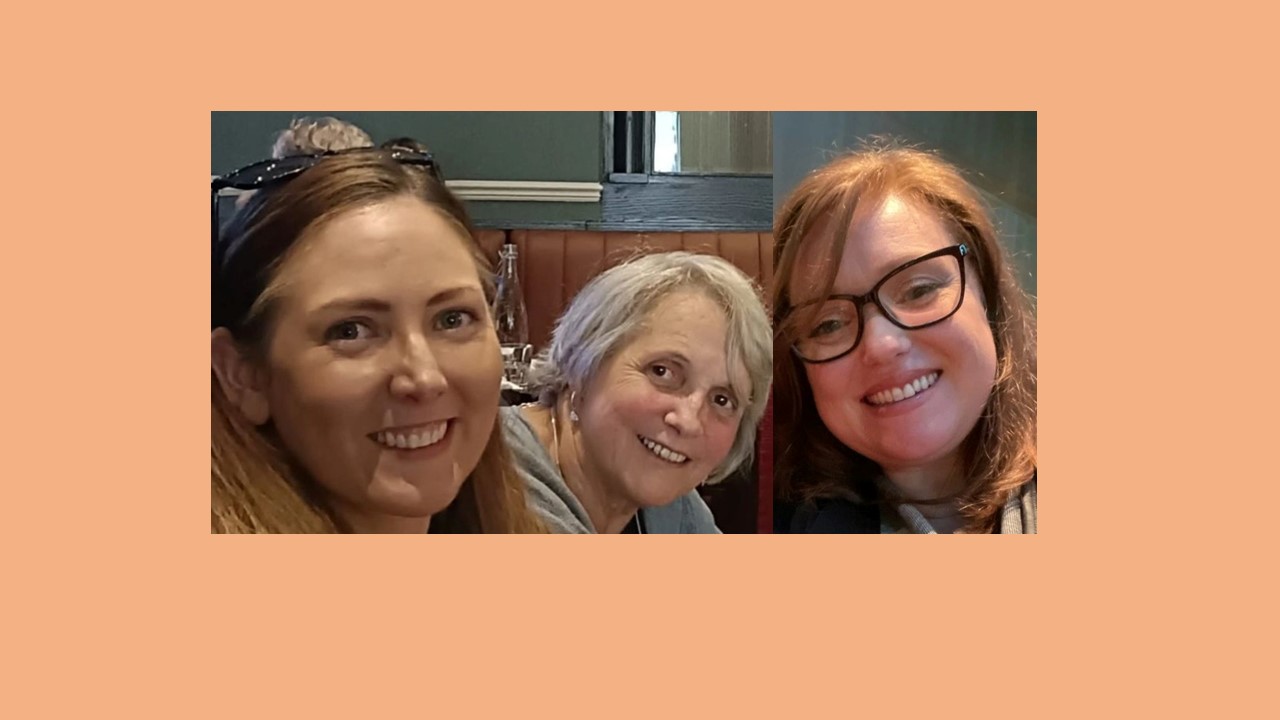
Meet Joan, Anne and Lyndsey. Hear their story and learn why they choose to work in partnership with the HSE.
24 February 2026
Meet Joan, Anne and Lyndsey.
Hear their story and learn why they choose to work in partnership with the HSE.
Joan’s Story: “My reason is Leo”
My reason is Leo.
He lives with Angelman Syndrome, a rare neurogenetic condition that brings complex medical challenges, but also a mischievous streak, a slapstick sense of humour, an infectious smile and giggle, and the kind of charm that makes him the unofficial greeter of our local shopping centre.
I work as a partner with the HSE to ensure that Leo, and all children and families like ours, are kept at the centre of how healthcare services are planned and delivered, that services work for us as well as for the system, and that the path is a little easier for those who come after us.

Anne’s Story: “Where my passion began”
For every person affected by a rare disease, there is a whole family affected.
My passion for partnership began in 1998, when my daughter was diagnosed at age 15 with 22q11.2 deletion syndrome. Before diagnosis, her care was, in my words, “chaotic,” and it remained fragmented even after we finally had a name for her condition. Trying to coordinate unconnected services made it clear that cross‑sectoral, integrated, coordinated care is essential for rare diseases.
This experience shaped my belief that patients and families must be at the heart of how services are designed and delivered.

Lyndsey’s Story: “Why I Became Involved in Rare Advocacy”
When you have a child with a rare condition, advocacy quickly becomes part of everyday life. From diagnosis through healthcare, education, therapies, supports, and future planning, families find themselves navigating complex and often disconnected systems.
As a parent of a child with an ultra-rare chromosome deletion, 2q24.2 Microdeletion Syndrome, and who is non‑speaking, I have always felt a responsibility to use my voice to highlight needs within the rare community. Many people communicate in different ways, and ensuring their voices are heard is essential. For many, access to Augmentative and Alternative Communication and assistive communication technologies is a lifeline.
While each condition is unique, families often share common experiences. Intellectual disability, autism, ADHD, epilepsy, and complex medical needs occur frequently across rare diagnoses. Families often find themselves coordinating care across health, disability, education, and social services, which can be overwhelming without joined up supports.
The National Rare Disease Strategy places partnership at its centre. True partnership means listening to lived experience, valuing co‑production, and embedding collaboration at every stage. A collective voice, across conditions and sectors, will be vital to ensuring full and effective implementation.

Why the National Rare Disease Strategy Matters
In Ireland, 1 in 17 people, around 300,000 individuals, live with a rare disease. Although each condition is uncommon, together they represent a significant part of our population.
The National Rare Disease Strategy 2025–2030 provides a long needed framework to address the challenges families face. Its 11 recommendations, including a National Rare Disease Registry, expansion of the National Rare Diseases Office, and improvements in diagnosis, treatment, and supports, aim to deliver earlier diagnosis, faster access to therapies, and better coordinated care.
The strategy directly addresses the “diagnostic odyssey” that families like Joan’s, Anne’s, and Lyndsey’s know well. The years spent searching for answers, the repeated assessments, the misdiagnoses, and the emotional and financial strain all take a significant toll.
Placing patients and families at the centre of service design is not just valuable, it is essential.
A Shared Commitment
The National Rare Disease Strategy sets out a clear path, but success depends on partnership. Families, clinicians, advocacy groups, policymakers, and service providers must work side by side to co-monitor the implementation, and co-create a change in service design and delivery.
Joan’s, Anne’s, and Lyndsey’s stories remind us why this matters. They show the human impact of rare disease, the gaps that families must navigate, and the strength of a united, collective voice.
Together, we can make this strategy a reality, and deliver better outcomes for everyone living with a rare disease in Ireland.